Cold mornings. Dark evenings. Shorter days. And a warm bed that feels WAY more appealing than heading outside for a run. You're not alone!
Even as a competitive marathoner and running coach, I often struggle to get out the door during the bitterly cold winter months. Especially while I’m in NY, if there's one thing I've learned over the years, it's that motivation won't always show up when you need it. That's why building sustainable habits matters more than relying on motivation alone.
Whether you're training for a spring marathon, maintaining your fitness, building your running base, or simply trying to stay consistent through the holidays, winter training presents its own challenges. You don't need to feel motivated every single day to make progress. You need a routine that works for YOU, some flexibility, and a reason to keep showing up.
I'm sharing my personal winter motivation routine, along with practical coaching strategies to help you build sustainable training habits that last well beyond the colder months.
Create a Pre-Run Routine That Gets You Excited to Move

Let's be real. Some mornings, getting out of bed is the hardest part of the workout. Instead of waiting around to feel motivated, I've created a little routine that helps me shift my mindset before I even lace up my running shoes.
Try talking to yourself in the mirror. YES, REALLY!
Sometimes, your biggest motivator has to be YOU. I'll look in the mirror and say, "YES, I CAN!" It might sound silly, but speaking positively to myself helps me get into the mindset to tackle whatever workout is on the schedule.
Fuel up and make it FUN! Sometimes I'll eat a mini chocolate cookie before heading out, partly because it's a little pick-me-up and partly because I genuinely enjoy it!
Of course, a cookie isn't a replacement for proper pre-run fueling. Depending on the duration and intensity of your workout, you'll likely need more carbohydrates to support your training. Not every part of your training needs to feel rigid or serious. Enjoy your food, feel strong, give your body what it needs, and have fun!
Turn up your favorite pump-up playlist or podcast. I'm talking BLASTING my favorite songs, including music from Moana, while getting dressed and lacing up my shoes. Music changes my energy almost immediately. Find a playlist or podcast that makes you want to MOVE, and make it part of your routine. Just make sure that if you’re running outdoors in the early mornings or evenings, you’re visible and can hear surrounding noises to be safe out there!
Write down four affirmations. Before every run, I love writing down four affirmations to remind myself what I'm capable of.
My top four affirmations:
YES, WE CAN!
WHAT HILL?
I AM THE CHAMP!
MAKE THIS WORLD MY BI*CH!
The goal is to develop your own pre-run ritual that makes getting started easier, even when the weather or your mood isn't the best.
Build Consistency Through Small Habits.
One of the biggest mistakes I see runners make is believing that every training session needs to feel amazing. It doesn't!
Some days, you'll feel unstoppable. Other days, your legs might feel heavy, work will be stressful, or your energy will be lower than usual. That's NORMAL. The athletes who make sustainable progress aren't the ones who train the hardest every single day. They're the ones who learn how to train consistently while adapting to what life throws their way.
Schedule your runs. Treat your training sessions like appointments, but leave room to adjust when life happens.
Start small. If you're struggling to build a routine, start with a manageable number of weekly runs instead of trying to do everything at once.
Focus on effort, not just pace. Cold weather, wind, snow, and uneven terrain can change how a run feels. Let effort guide you instead of forcing your usual pace.
Celebrate the small wins. Big and small. Getting through a challenging training week, completing your strength session, or choosing recovery when you need it ALL count as progress.
Give Your Winter Miles a Purpose
Nothing makes winter training feel more meaningful than having something exciting to work toward. For many runners, that means putting a spring race on the calendar.
Maybe you're training for your first half marathon, chasing a marathon PR, or looking to improve your 5K time. Having a goal gives your training direction.
Your goals don't always need to revolve around a finishing time. Winter is also an incredible opportunity to focus on what will make you a stronger, more resilient runner. Goals can include building a consistent strength training routine, improving your running technique and mechanics, establishing better fueling and recovery habits during training, and getting more comfortable running by effort rather than perfect paces. Also, winter is an excellent time to work on developing your base with easy runs and workouts, and sharpening up that speed to nail a fast mile to 5K before going back up to the marathon distance, if you’re not already training for a marathon, that is!
Many of our RWA athletes do this between marathons to stay fit and help get a faster marathon time. All of the training connects! Holding a higher portion of your mile race pace in shorter distances will help you hold faster marathon times with proper periodization, personalization, consistency, and, of course, training ahead!
The work you do during the winter can set you up for a stronger spring racing season.
Switch Up Your Routes and Add Variety to Your Training
Same route. Same treadmill. Same workout. Every. Single. Week. BORING!
A little variety is exactly what your mind and body need. Try exploring a new neighborhood, running somewhere scenic, or meeting a friend at a different trail. New scenery means new energy!
Running doesn't have to be your only form of movement. Winter is a fantastic time to incorporate strength training, cross-training, mobility work, and other activities that support your running.
Personally, I love incorporating strength and technique work because running is a SKILL. There's always something we can improve. Variety can keep training interesting while letting you work on areas that might not get as much attention during peak race training. Just make sure you balance your training load and give yourself adequate recovery between challenging sessions. More isn't always better.
Lean Into Your Running Community
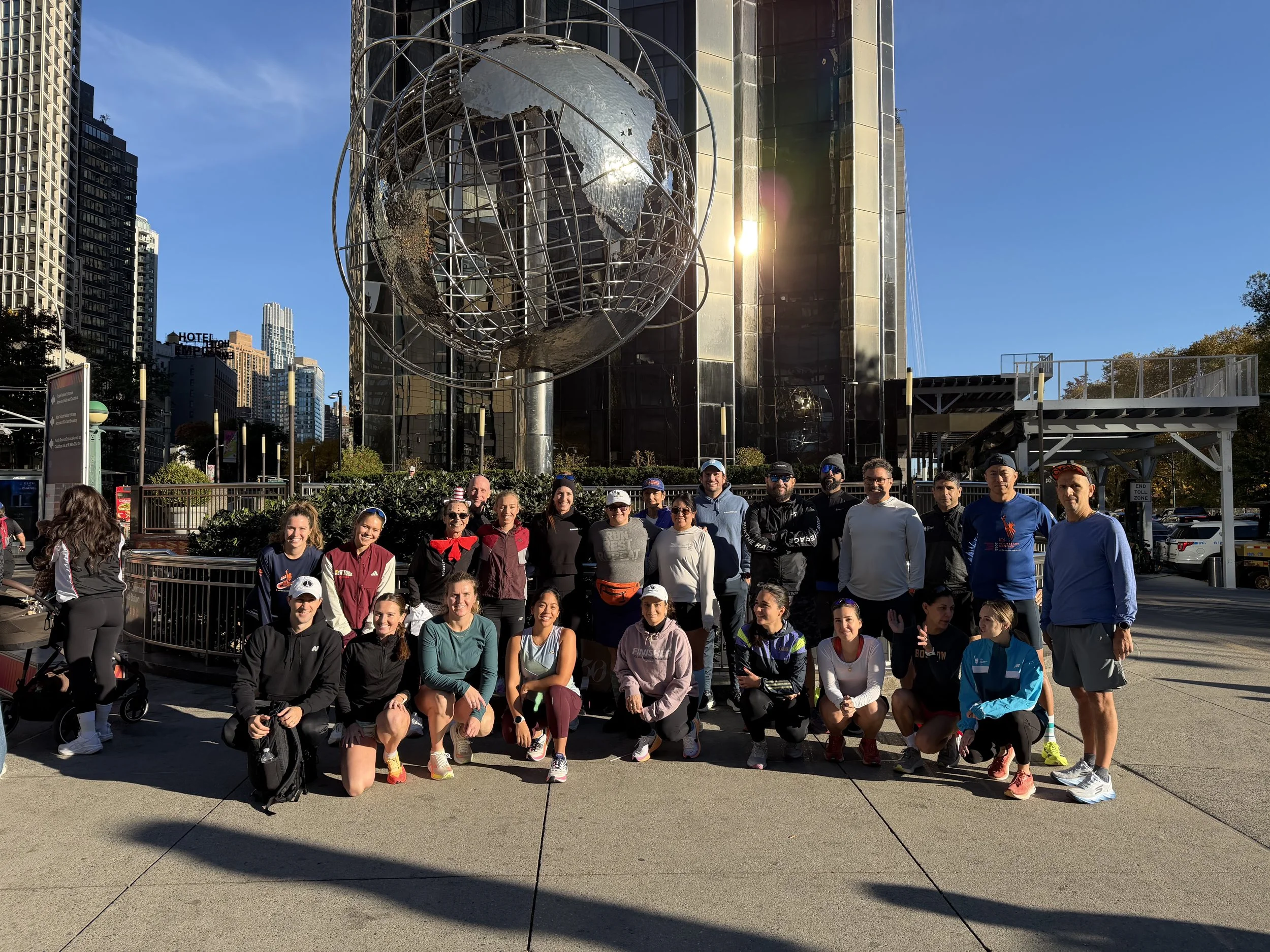
There's something special about surrounding yourself with individuals who understand why you voluntarily wake up at 5 AM to run miles before work. Whether you're running through the streets of NYC, enjoying the beautiful San Diego coastline, or logging treadmill miles somewhere snowy, your running community can make a HUGE difference. When motivation is low, accountability can help!
Schedule a weekly run with a friend. Join a local running club. Participate in a virtual challenge. Or simply check in with your coach or teammates.
On the flip side, solo running can give us space to reconnect with ourselves, process our thoughts, and remember why we fell in love with the sport in the first place. You don't need someone physically running beside you to feel connected to a community. We run better together, even when we're running separately. Don’t forget it! Join our mile-to-marathon virtual community group here because we’ve got a spot for YOU!
Fuel Your Training and Prioritize Recovery
This is a BIG one. Winter training isn't just about finding the motivation to get outside.

It's also about making sure your body has what it needs to recover, adapt, and keep showing up. When the weather gets colder, it's easy to underestimate how much fluid you're losing or overlook your fueling needs because you're not sweating as noticeably. Your body still needs adequate energy, carbohydrates, protein, fluids, and recovery to support training. Fuel before your runs and eat after your workouts. Replenish 30-45 minutes after a run or workout with carbs, protein, and fats; do the same beforehand, but during training, dabble in gels or fuel that works for you. Stay hydrated and practice your strategy during training based on your sweat rate and personalized needs - a great time to get a sweat test if you haven’t done so! Recovery is where the magic happens, so get that consistent sleep and respect those recovery days, sticking to low-impact cross-training if you feel the need to work out during one of them! Recovery is where we reap the benefits of training, and sleep is free! Use these tools and watch your best efforts and times improve in the spring months ahead!
Have a Backup Plan for the Days When Winter Wins
Changing your workout doesn't mean you've failed. If there's ice on the roads, or conditions that make running unsafe, choose an alternative. Hop on the treadmill. Cross-train indoors. Move your workout to another day. Take a rest day if your body needs it. Winter training requires flexibility. The same goes for the holiday season. Travel, family gatherings, work deadlines, and changes in routine are all part of LIFE. Eat the cookie, miss the run; it’s a-okay. You don’t need to make anything up, and your races will be there for you still when it’s time to hunker down and work. That's what sustainable training looks like.
Reconnect With Your WHY
During the winter months, I always return to my WHY. Running gives me something meaningful, builds confidence to challenge myself, lets me connect with others in the community, and helps me discover my limits (and break past them).
Maybe you run for your mental well-being, your family, your health, your next race, or simply because it makes you HAPPY. Whatever it is, write it down. Put it somewhere you'll see it on those dark winter mornings. Remind yourself that every training session doesn't need to be extraordinary to contribute to something meaningful!
Start With Just TWO Habits
I don't want you to read this and feel like you need to overhaul your entire routine tomorrow. Instead, pick two habits to focus on over the next couple of weeks.
Maybe that's laying out your running clothes every night and eating a proper breakfast before your morning workouts. Maybe it's scheduling a weekly group run and committing to two strength sessions. Maybe it's writing down four affirmations before every run and creating a playlist that gets you excited to move.
Start there. Practice those habits consistently, see what works, and adjust as needed. Sustainable training isn't about doing everything perfectly. It's about creating a routine that fits your life and supports the runner you're working to become.
Hot Takes
You don't have to love every run. You don't have to hit every pace. You definitely don't have to train through every obstacle. And you most definitely don't need to earn your holiday meals or feel guilty about enjoying time away from training!
So please give yourself some GRACE. If you're tired, rest. If you're overwhelmed, slow down. If you're feeling energized, embrace it! If you're struggling to get out the door, try a little mirror pep talk, turn up your favorite playlist or podcast, and remind yourself why you started.
After my own pre-run routine, I try to remove the unnecessary excuses and focus on showing up for myself. But showing up doesn't always mean running. Sometimes, it means making the smarter decision for my long-term health and performance. The goal isn't to win every workout. It's to build a healthy, sustainable relationship with running that lasts for YEARS.
Let's keep supporting one another, celebrating the small wins, and finding JOY in the process. We run better together. YES, WE CAN!
Disclaimer
Please note that the above insights and suggestions reflect a combination of my own experience blended with science. Please work with your coach, RDN for fueling guidance, or chat with your running friends to determine the strategy that helps you arrive feeling fresh, motivated, confident, fueled, and ready for your run or your race!
