March 2, 2025 | Tokyo, Japan | Finish Time: 2:57:31
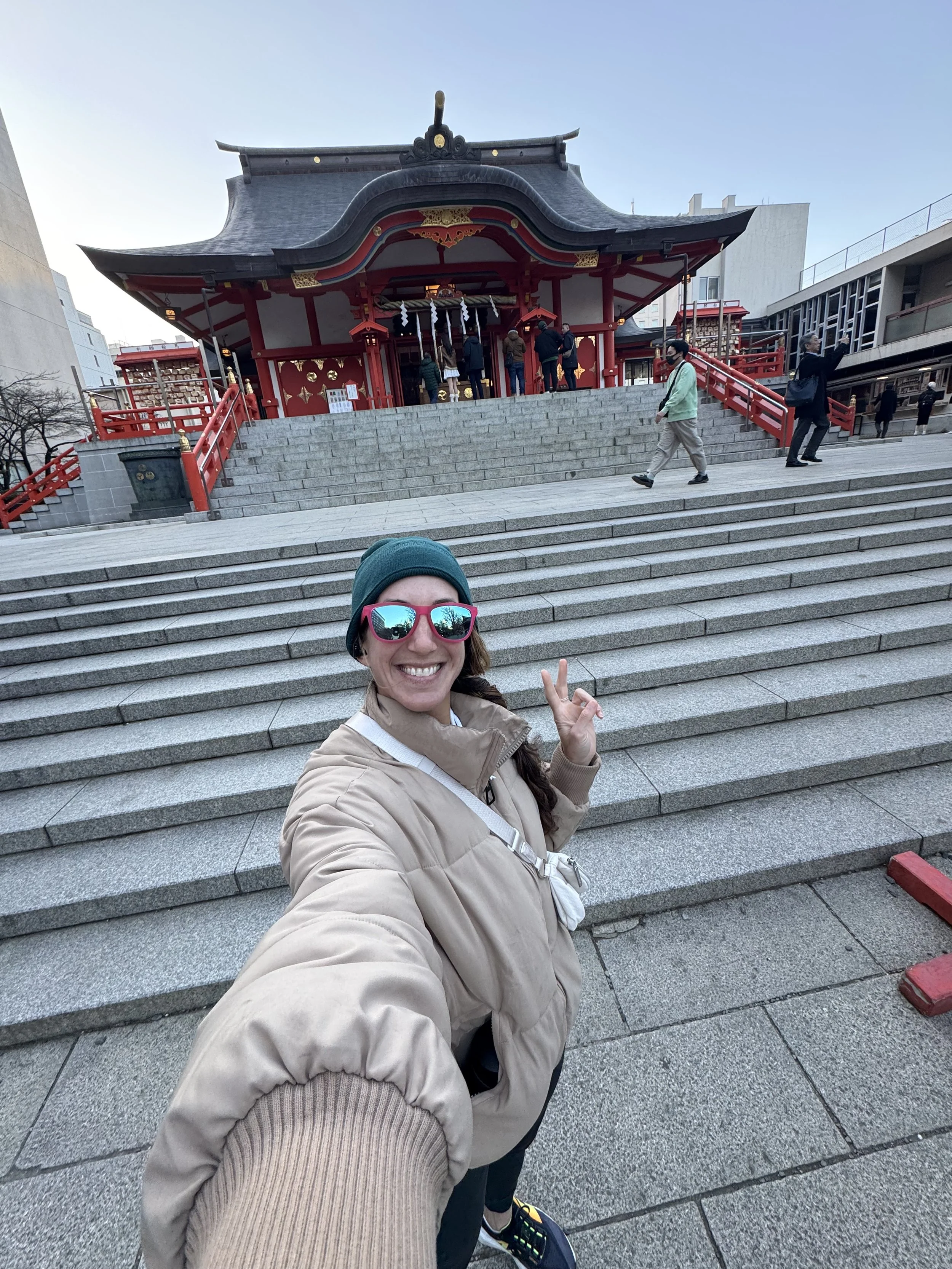
Some races are about chasing a time. Others remind us why we run in the first place. The 2025 Tokyo Marathon gave me both. I arrived in Tokyo prepared to chase a 2:52 marathon, confident in my training, fueling, and race-day strategy. What unfolded over 26.2 miles was something I never could have anticipated. From unexpected hydration challenges and rising temperatures to an emotional family loss, this race tested my physical and mental resilience in ways I hadn't experienced before. Yet, through it all, I crossed the finish line with a personal best of 2:57:31, earned my fifth World Marathon Major star, and walked away with lessons that extend far beyond running.
Here's how it all unfolded!
Pre-Race Preparation: Training, Tapering, and Fueling
Marathon Training: Building Toward a 2:52 Goal
Key workouts tailored for race day included long aerobic sessions of up to 22 miles and 20-mile runs featuring goal marathon pace (GMP) and effort-based miles. My peak mileage week was just under 80 miles, giving you an idea of the consistent training I completed in the months following the Berlin Marathon on September 29, 2024. Running a 1:23:12 half marathon in Houston on January 19 boosted my confidence in what I could achieve in Tokyo under ideal conditions. I also replicated my race-day setup from Houston, including my handheld bottle and Naked running belt, although the weather was more favorable than what we ultimately faced in Tokyo. By focusing on my lactate threshold through 1K repeats, tempo runs, and cruise intervals, I improved my stamina and endurance. These workouts helped me sustain faster paces more comfortably and confidently target the mid-to-high 6:30s per mile heading into race day. I felt strong, prepared, and ready to go after a big goal!
Tapering Strategy: Arriving Early and Adjusting to Tokyo
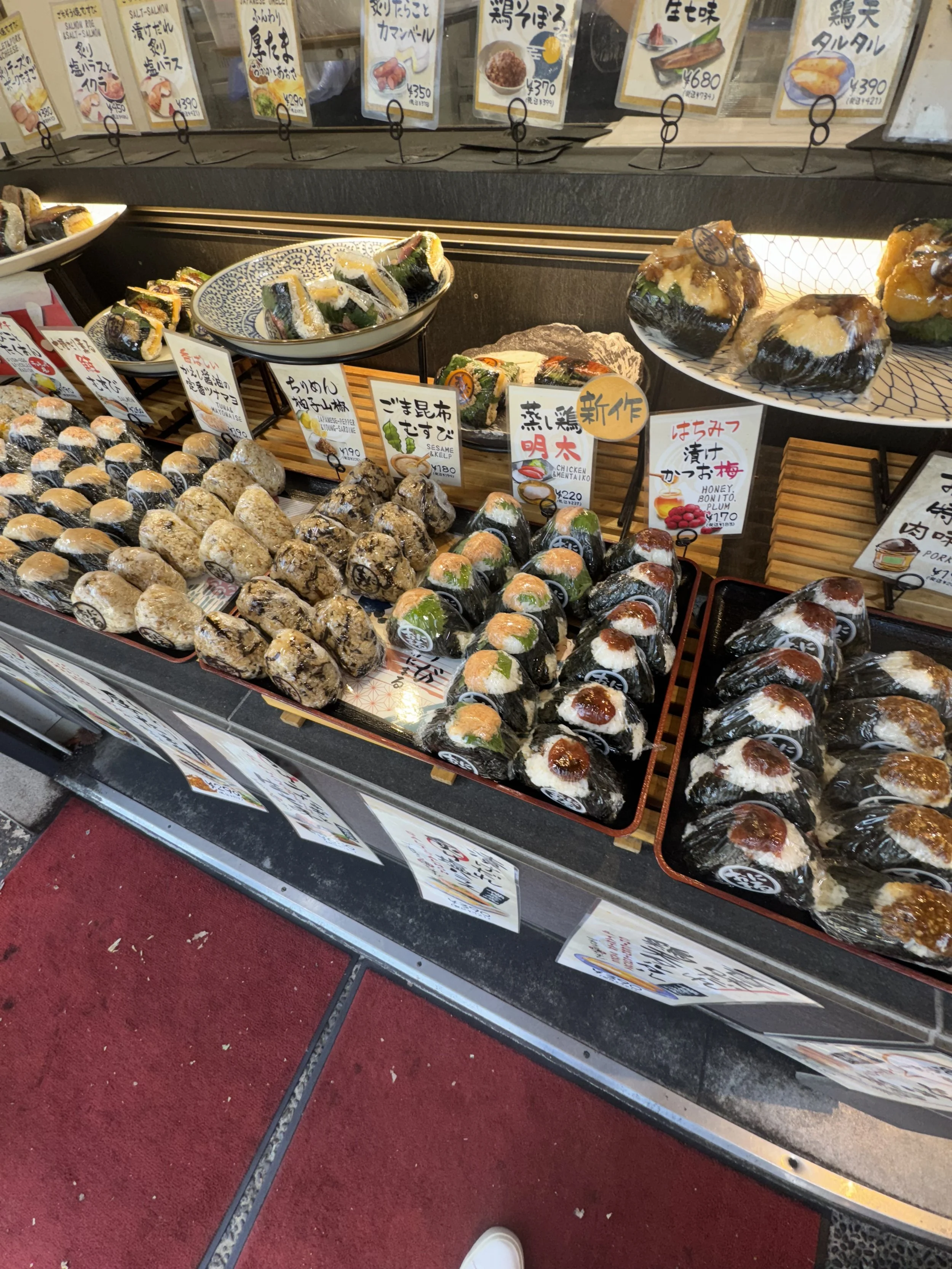
I felt GREAT! Arriving in Tokyo the Sunday before the race was a game-changer. Coming from San Diego, I wanted enough time to adjust to the significant time difference. The jet lag finally wore off around Thursday or Friday, after four to five nights of sleep in Tokyo. By Friday morning, my circadian rhythm felt much more regulated, and I wasn't waking up at 4:30 a.m. anymore. I progressively increased my carbohydrate intake leading up to race day while continuing to eat adequate protein and fat. I didn't introduce any unfamiliar ingredients, although navigating food options in Japan required some flexibility. Here is my packing list/eats/some restaurants I pulled together that you might put to use when you run the Tokyo Marathon!
I stuck to the basics:
Chicken and eggs
Rice and rice balls
Pastries and bread
Familiar, carbohydrate-rich foods from 7-Eleven
Keeping things simple was a game-changer. I felt powerful, recovered, and ready to tackle the marathon!
Race-Day Gear, Nutrition, and Hydration
My race-day setup included:
Shoes: Nike Vaporfly 2, my go-to racing shoes
Apparel: Rabbit race shorts and a Nike three-quarter-length top
Fuel: 11 gels, totaling approximately 1,100 calories and 275 grams of carbohydrates
Fueling frequency: Approximately every 20 minutes
Caffeine: My final three gels contained caffeine
Hydration: 250 mL of water containing 1,000 mg of sodium during the first 13.1 miles, supplemented by aid stations
Yep, you read that correctly. ELEVEN gels! I had practiced my fueling strategy extensively during training, and it worked for me. The final three caffeinated gels gave me an additional boost when I needed it most. Unfortunately, hydration became a much bigger challenge than I had anticipated. More on that shortly.
Tokyo Marathon Expo Experience
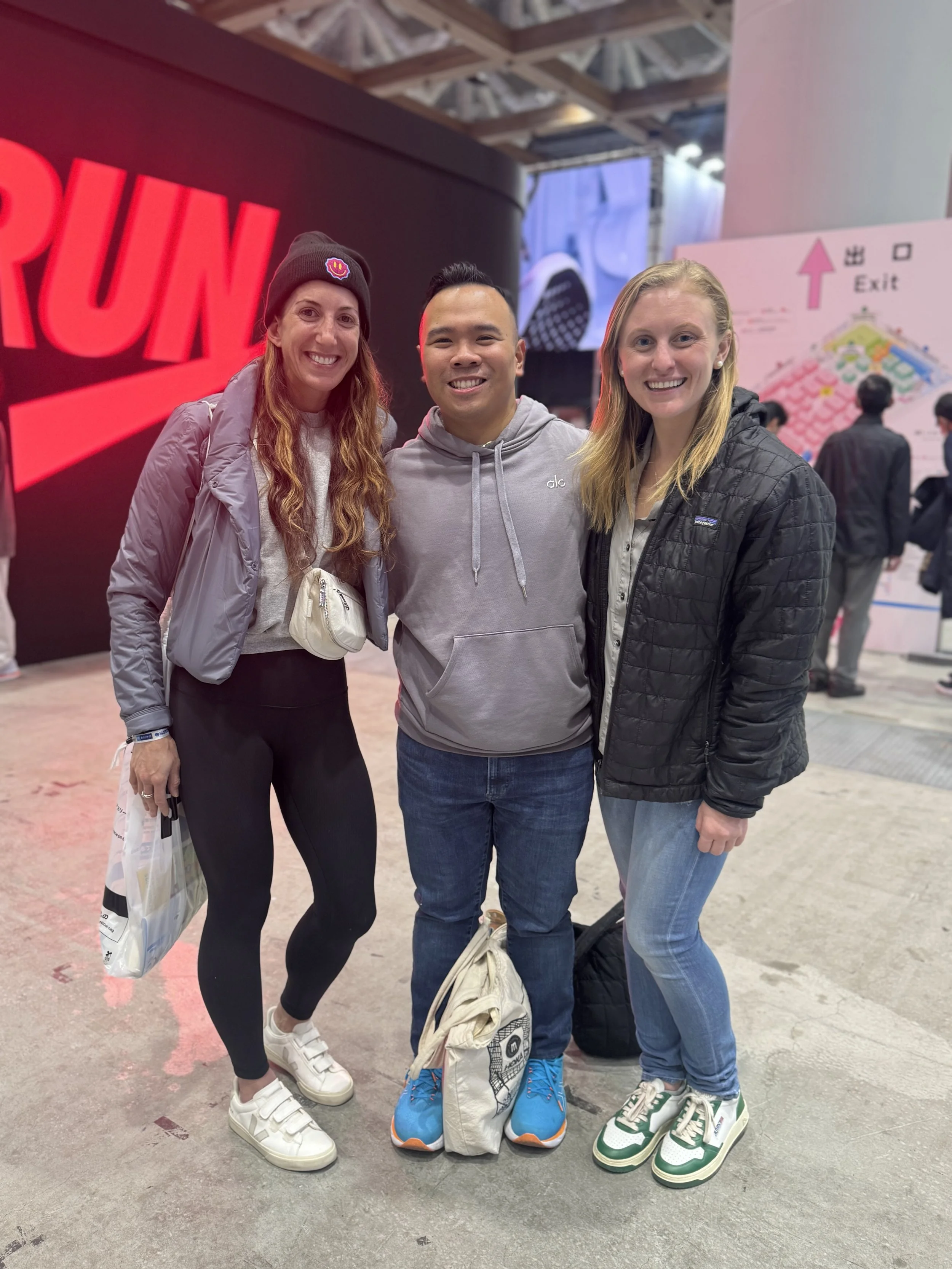
I attended the expo on Thursday evening around 5:30 p.m. with two of my athletes. We spent approximately two hours exploring the expo before heading back to the hotel. My dad arrived in Tokyo from Thailand that evening, which made the experience even more special. We enjoyed a late dinner together and headed to bed shortly afterward. Having him there meant the world to me, especially given everything that would unfold on race day.
Race Morning: Ready to Chase 2:52
My Pre-Race Routine
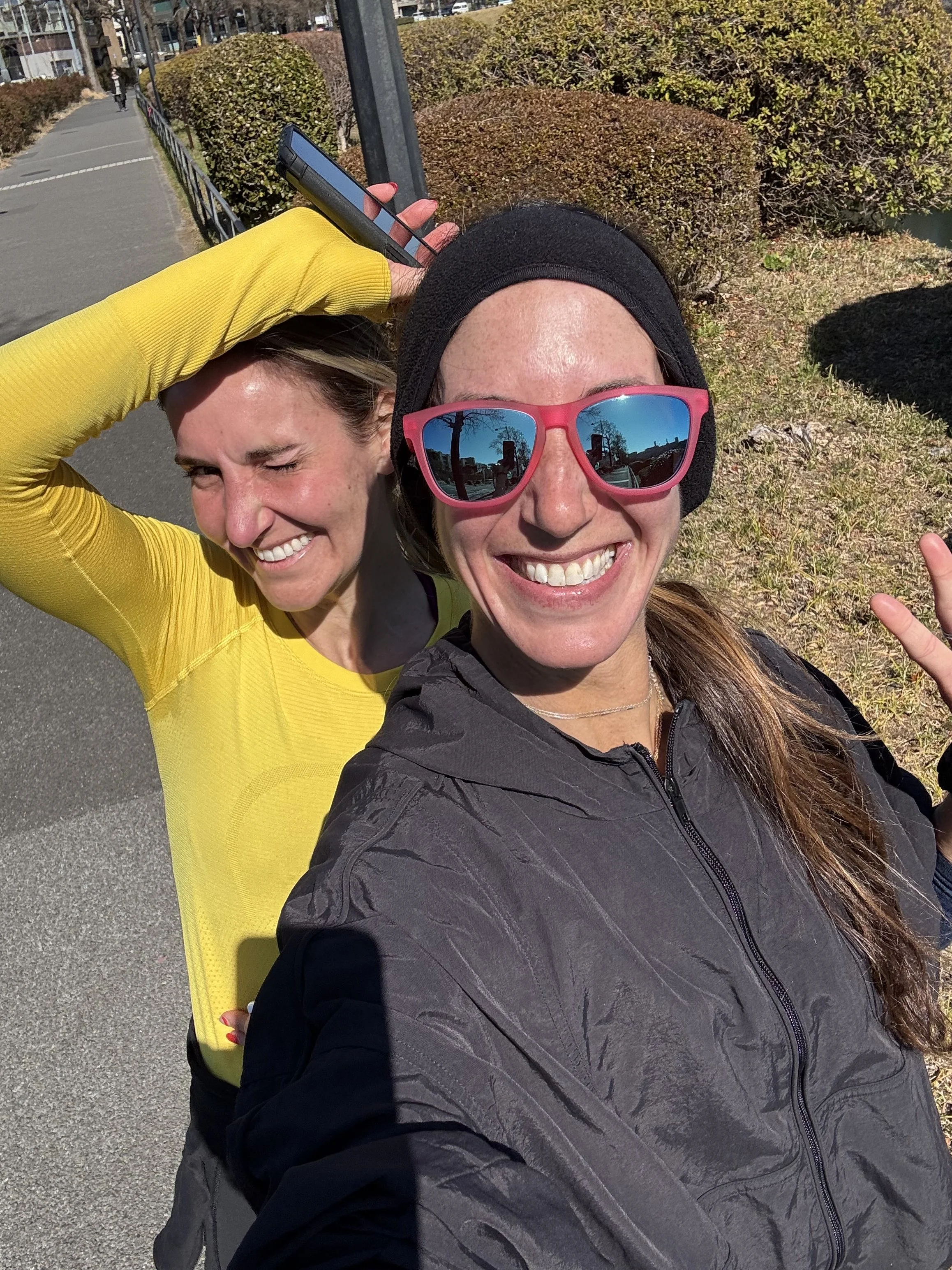
After nearly eight hours of sleep the night before the marathon, I woke up feeling rested and ready. For breakfast, I had pancakes with syrup and grape juice from 7-Eleven. CARBS GALORE! I also had coffee and approximately 500 mL of water with electrolytes. The temperature was around 55°F when the morning began. I walked just under a mile to the starting area with my dad, carrying my gels in my sports bra, a small 250 mL handheld bottle (please don't blow me up on social media!), and two salt capsules in my shorts pocket. Red sunglasses on. Game time! Before leaving, I wrote one word on my arm: BELIEVE.
I spoke my 2:52 goal into existence and reminded myself that I had done the work to chase it. My SaltStick capsules fell out of my pocket at the start. Thankfully, I had two spare capsules in another pocket, but as the race progressed, I realized those two weren't enough for my sodium replacement needs.
Coaching Tip: We roll with the punches. Life ebbs and flows, friends! You can prepare for countless race-day scenarios, but sometimes things happen that require you to adapt.
Getting to the Start Line
Security was surprisingly easy. I walked through the detector in my throwaway clothes and made my way into Corral C. My plan was to see my dad at miles 10 and 19, where he would provide the hydration bottles I had practiced using throughout training. I couldn't bring my extra hydration through security, so these planned handoffs were an important part of my race-day strategy. Thankfully, they’ve changed that for anyone running this race after 2025!
The energy at the start was ELECTRIC. Runners were excited, the atmosphere was incredible, and I could already hear the crowds roaring. Tokyo, let's DO THIS!
The Tokyo Marathon: Mile by Mile, Kilometer by Kilometer
Miles 1–13.1: Finding My Rhythm

The gun went off, and it was TRULY GAME TIME! The opening mile was congested, and I settled into approximately a 7:01 pace before finding my rhythm in the 6:25–6:35 range. My original plan was to maintain a strong, controlled pace through mile 20 before pressing the gas over the final 10K. The nerves settled, and I focused on easing into the discomfort rather than fighting it. Although the start was crowded, the congestion wasn't quite as challenging as Berlin the previous September. By approximately mile 3, the field had opened up, giving runners more room to settle into their pace. The gun went off at 9:10 a.m., and I crossed the starting mat approximately 50 seconds later. For anyone unfamiliar with race timing, your official chip time measures how long it takes you to complete the course after crossing the starting line, whereas gun time begins when the race officially starts. I felt like a METRONOME. One of my strengths as a runner is my ability to settle into a pace and maintain it consistently. My athletes have reminded me of this many times, and I've leaned into it throughout my last four marathons. Knowing your strengths matters. When things get challenging, those strengths become tools you can rely on.
Mid-Race: When Hydration Became the Biggest Challenge
Let's talk about sodium and hydration. I am an EXTREMELY salty sweater, and this isn't a guess!
At the end of October, I completed a sweat test with Precision Fuel & Hydration. My results indicated approximately:
Sodium concentration: 1,800 mg per liter of sweat
Sweat rate: 1.45 liters per hour
These numbers helped me better understand my individual hydration needs and refine my strategy during training. I practiced with a handheld bottle containing about 500 mL of fluid and a sodium concentration of around 1,300 mg per liter. This strategy worked extremely well for me in training and during the Houston Half Marathon, where I came close to my PR. My goal wasn't necessarily to replace every milligram of sodium lost through sweat. Instead, I wanted to replace a meaningful portion of my losses while maintaining an appropriate balance of fluids and electrolytes.
Unfortunately, the hydration I had available on the Tokyo course didn't match what I had practiced. Pocari Sweat, water from aid stations, and my remaining salt capsules helped, but they weren't the same as my planned hydration strategy. When you're racing a marathon at a high intensity, those details matter!
Fueling and aid station information for the Tokyo Marathon can be found right here!
Coaching Tip: Sweat rate and sodium concentration vary significantly from runner to runner. Your hydration strategy should match your individual needs, environmental conditions, race duration, and what you practiced during training.
Miles 10–19: An Unexpected Turn
This is where the race became about much more than running. My dad was supposed to meet me at miles 10 and 19 with my hydration bottles. I missed him at mile 10. At the time, I had no idea why. What I didn't know was that my dad was receiving calls and messages about my grandmother, who was passing away while I was running. He had to leave the course. I didn't know any of this until after the marathon, but I could sense something wasn't right. As I continued running, I focused on what I could control. My breathing. My posture. My cadence. My effort. I relied on the electrolytes available along the course, the two sodium capsules I still had, and the water stations. The temperatures were rising, and the exposed sections of the course were getting sunnier. I could feel the heat and sweat loss. I kept moving forward. I thought about my athletes, my family, my heart, and everything running has given me beyond the sport itself. I reminded myself of everything I tell my runners.

Stay present. Run the mile you're in. Focus on what you CAN control!
Looking back, something incredibly powerful happened that day. My grandmother was passing away, and without knowing it, I was drawing on the same grit, perseverance, and belief in myself that she had always encouraged. I had an angel with me.
Adapting When Plan A Falls Apart
Missing both hydration handoffs meant I had to adjust my strategy for the second half of the marathon. Could I change what had happened? Nope. I had to make the best of what was available. I focused on staying relaxed, breathing efficiently, taking my gels, and using the hydration stations as effectively as possible. My body was strong, but the conditions were taking a toll. The crowds, however, were UNREAL. Their energy helped carry me through some incredibly difficult moments.
The Tokyo Marathon Crowd: An Experience I'll Never Forget
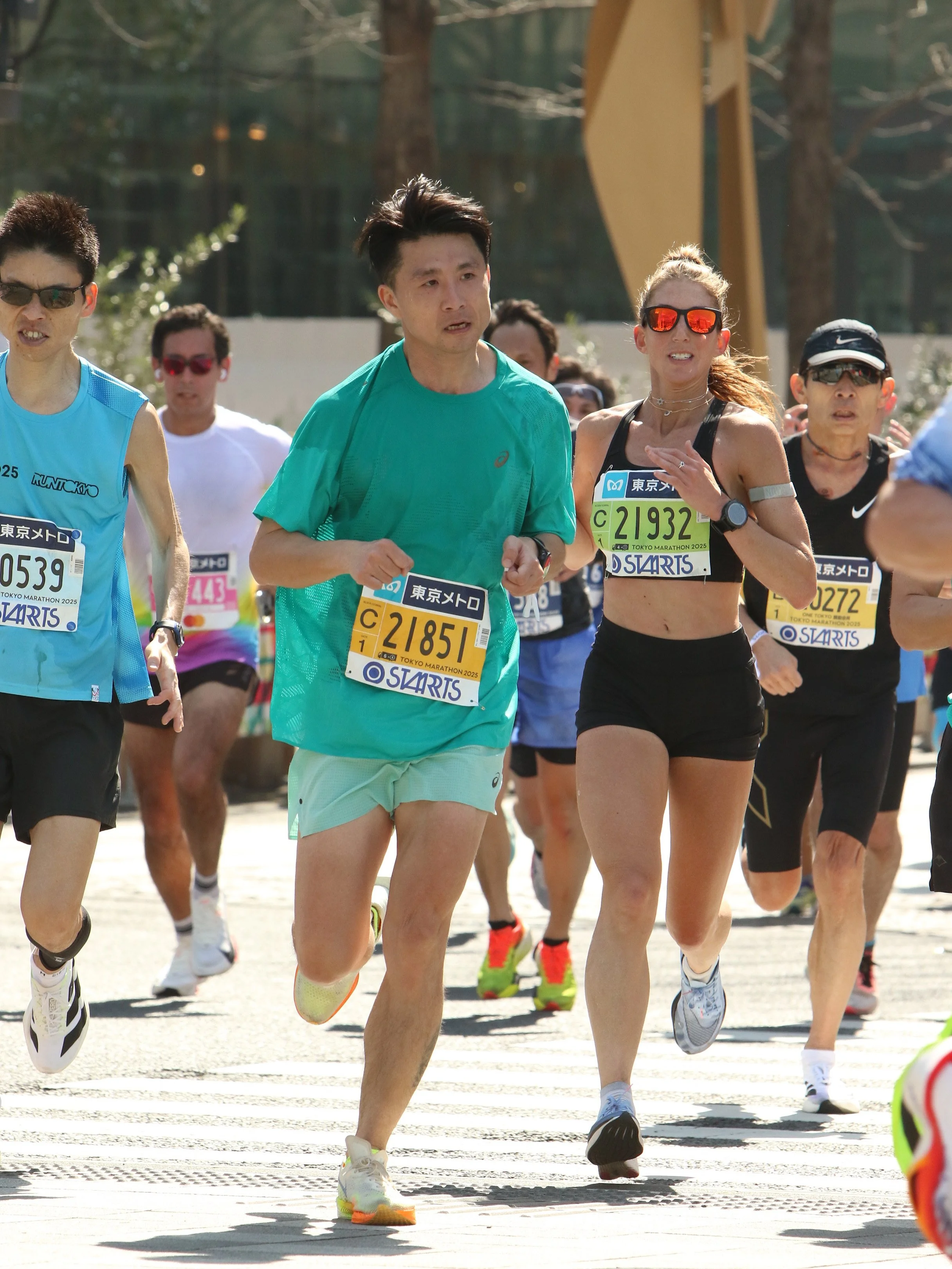
The crowd support was electric from start to finish. At one point, while running up one of the smaller hills, a runner from Dubai next to me shouted: "F this hill—let's go, girl!" BOY, did I go! Seeing the elite runners on the opposite side of a hairpin turn was another incredible moment. Despite the blazing sun, watching them race reminded me that we were all out there challenging ourselves, pushing our limits, and sharing an unforgettable experience. My pace group felt like a FORCE. People were cheering in different languages, and the energy was contagious. As I approached the final hairpin turn toward the Imperial Palace, I raised my arms and encouraged the spectators to make some noise. They delivered! That energy gave me something extra when my legs desperately needed it.
The Final 5K: Mental Toughness, Grit, and a New Personal Best
The final 5K felt like FOREVERRRR. I could see runners around me struggling, some with hamstrings seizing up as the heat and humidity took their toll. I was hurting, too. My mind wandered toward negative thoughts more than once. I wanted to stop. Instead of fighting those thoughts, I acknowledged them and redirected my attention. "Form, Alli." "Knee drive." "Drive those arms." "Keep moving forward." "Don't fall."
Then came the reminder that changed everything. I GET TO F*ING DO THIS! I'M RUNNING THE TOKYO MARATHON. WHAT ON EARTH?! THIS IS A DREAM!
My body was resilient. My mind was fierce. I had trained for this. We were pressing the gas as hard as we could over that final 5K! I took my final gel around mile 25 and held on. The caffeine gave me a boost, and I continued fighting for every second. As we made the final left turn onto the cobblestones, the crowd was ROARING. I knew my original 2:52 goal wasn't happening. I also knew I could still run a personal best. A PR is a PR for a reason. It's the fastest you've ever run! So I adjusted my goal. Plan A was off the table. Plan B was to finish as strongly as possible and celebrate everything I had accomplished. I crossed the finish line in 2:57:31. A NEW PERSONAL BEST!
I shed a few tears immediately afterward. Not because I was disappointed about missing 2:52, but because I was genuinely proud of what I DID accomplish given the circumstances. I had fought for every step. That meant everything.
Tokyo Marathon 2025: Official Results and Mile Splits
Official Finish Time: 2:57:31
Although my pace slowed in the second half, I was proud that I kept fighting through the challenges.
Here are my recorded mile splits:
Mile 1 7:10
Mile 2 6:34
Mile 3 6:25
Mile 4 6:24
Mile 5 6:26
Mile 6 6:34
Mile 7 6:25
Mile 8 6:41
Mile 9 6:30
Mile 10 6:36
Mile 11 6:35
Mile 12 6:33
Mile 13 6:44
Mile 14 6:42
Mile 15 6:38
Mile 16 6:44
Mile 17 6:49
Mile 18 6:48
Mile 19 6:45
Mile 20 6:59
Mile 21 6:42
Mile 22 6:38
Mile 23 6:54
Mile 24 6:45
Mile 25 6:53
Mile 26-26.2 6:52
The splits tell part of the story, but they don't capture everything that happened physically, mentally, and emotionally throughout those 26.2 miles.
Post-Race: The Moment That Changed Everything
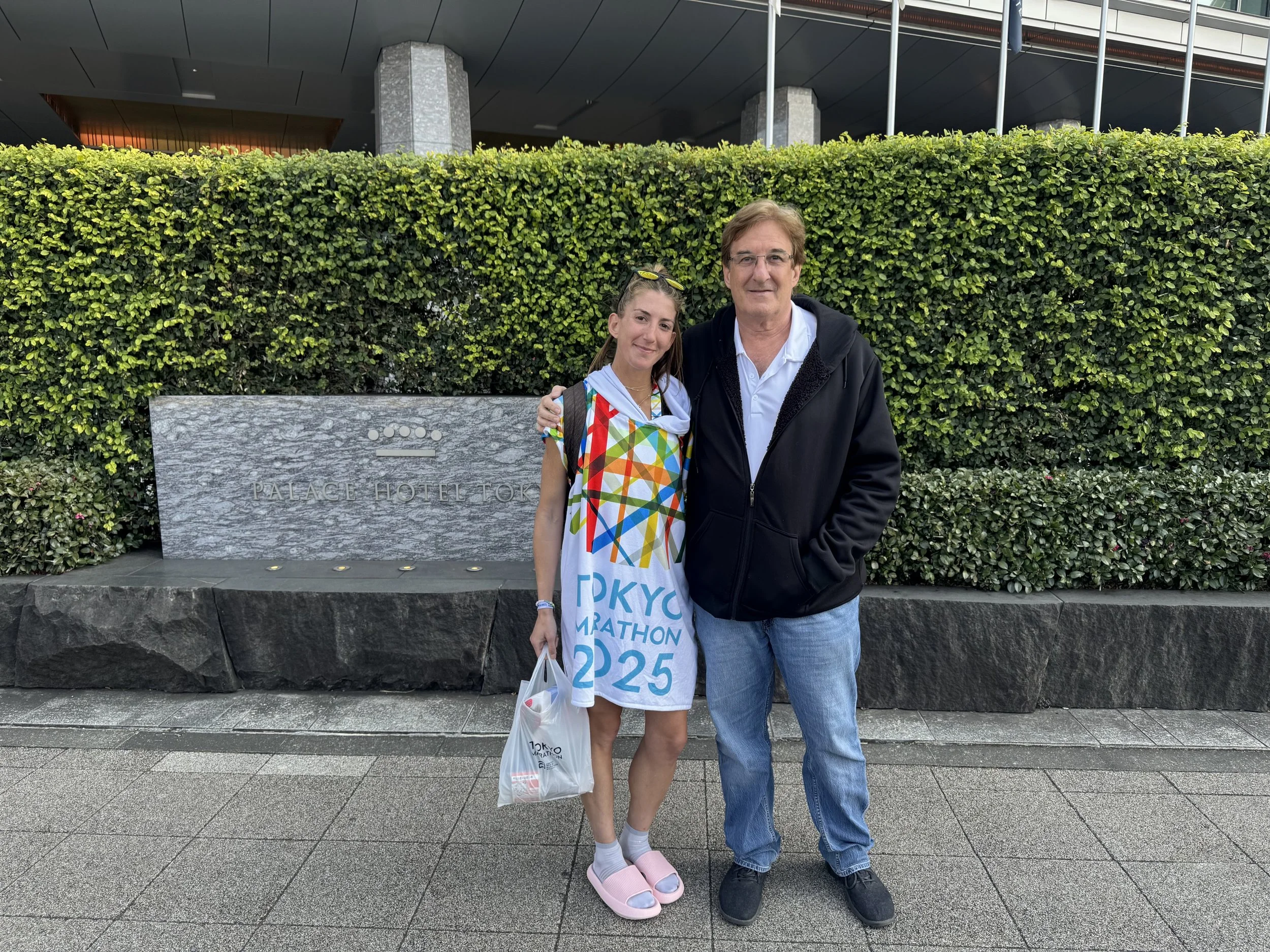
After receiving my medal, I headed back to the Palace Hotel Tokyo. The medal presentation was such a cool experience, although the immediate post-race nutrition options could have been better. When I arrived at the hotel, I saw my dad standing there with his arms raised. I was excited to share my result. "Yay! Not what I expected, but a PR on a tough day!" Then I asked him, "What happened to you? Are you okay?" He stood there, looking blank. Something was wrong. He said one word. "Grandma." I lost it. I broke down and fell into his arms, giving him the biggest hug. I felt numb. Devastated. In disbelief. In that moment, everything about the race changed. We had just lost someone incredibly important to our family, and we were thousands of miles from home. But we had each other. Being able to support my dad and share that emotional moment with him was an incredible gift. I know my grandmother would have wanted us to embrace each other, celebrate life, and appreciate the moments we had together. The unexpected made this a once-in-a-lifetime experience.
Finding Gratitude in an Unimaginable Moment
Was this my best race? In some ways, yes. In others, no. Did I have challenges working against me? Absolutely. Did I accomplish my A-goal? Nope. I'm okay with that. We'll get it another time! More importantly, this experience reminded me that the present is all we truly have. I allowed myself to feel everything. I used this experience to become a better person and be there for my dad. Life is bigger than any finish time. Sometimes the greatest victories aren't measured by the clock. Most often, they actually aren’t!
Post-Race Recovery and Celebrating My Athletes
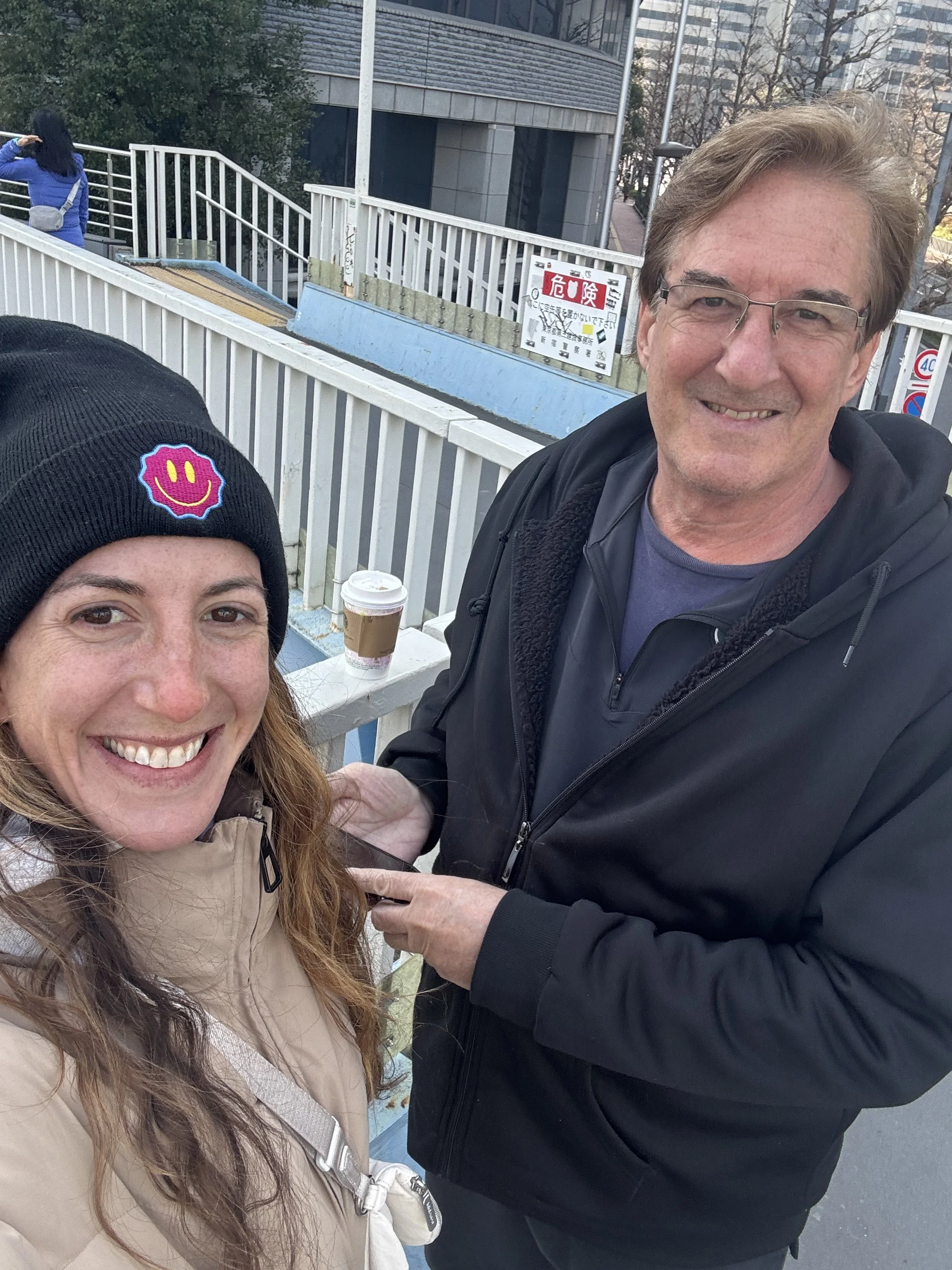
After the marathon, I grabbed some rice balls from 7-Eleven and later enjoyed a delicious meal with our friend Jamie, who also crushed her race. Those 11 Maurten gels had kept me fueled throughout the marathon, but a girl's gotta eat!
I spent the afternoon grazing on pretzels and replenishing my energy stores. Proper post-race nutrition matters, especially after an effort as demanding as a marathon. Two of my athletes also had incredible races in Tokyo. One completed his sixth World Marathon Major, while another experienced a redemption race after returning from injury. Watching my athletes achieve their goals reminded me again why I love this sport and coaching so much.
My legs actually felt surprisingly good afterward, which I attribute in part to the consistent training, strength work, fueling, and recovery strategies I had prioritized throughout the build. Heck YES!
What I Learned From the Tokyo Marathon
Every marathon teaches us something. Sometimes those lessons are about pacing, fueling, and training. Other times, they're about resilience, perspective, and appreciating the opportunity to do something we love. Here are my biggest takeaways.
1. Your Hydration Strategy Matters
I learned how important it is to understand my individual sweat rate and sodium losses. The hydration strategy I practiced worked extremely well during training, but I couldn't execute it as planned on race day. For future marathons, I'll prioritize races and logistics that let me access the fluids and electrolytes I've trained with.
Coaching Tip: Practice fueling and hydration under race-day conditions, and have a backup plan if your original strategy becomes unavailable!
2. Focus on What You Can Control
There were countless moments during Tokyo when I could have allowed frustration to take over.
Instead, I redirected my energy toward what I could control:
My effort
My breathing
My running form
My fueling decisions
My mindset
My response to unexpected challenges
That's a skill we can train just like our endurance. I trained this all throughout my training and did not save this for race day! Take note!
3. Mental Toughness Is Built Before Race Day
I didn't suddenly become mentally tough during the final 5K. I had practiced those skills throughout training. Every challenging workout, solo long run, uncomfortable interval, and moment of self-doubt gave me an opportunity to strengthen my mental game. When things became difficult in Tokyo, I had a toolbox to draw from.
4. A Personal Best Is Still a Personal Best
It's easy to become so attached to a goal time that we overlook everything else we've accomplished. I didn't run 2:52. I did run 2:57:31. Under challenging conditions. While adapting to unexpected circumstances. I earned my fifth World Marathon Major star! Heck YES! That's something worth celebrating.
5. Running Is a Gift
This was the biggest lesson of all. We get so caught up in pace, mileage, splits, and finish times that sometimes we forget what a privilege it is to run. Every starting line is an opportunity. Every finish line is a gift and a WIN! Every experience, whether it goes according to plan or not, gives us something to learn from.
Advice for Future Tokyo Marathon Runners
Would I recommend the Tokyo Marathon? ABSOLUTELY! Tokyo lived up to the hype. The course, crowds, atmosphere, and entire experience were unforgettable. If you're planning to run Tokyo, here are my recommendations.
Arrive Early
If you're traveling from the United States, consider arriving approximately one week before race day. Giving yourself time to adjust to the time difference can make a significant difference in how rested and prepared you feel.
Practice Your Race-Day Nutrition
Familiarize yourself with the foods available in Tokyo, but avoid introducing unfamiliar foods immediately before the race. Practice your pre-race meals, carbohydrate intake, and hydration strategy during training. There are so many good spots in Shinjuku - love me some rice balls, chicken, and eggs! A perfect runner’s pre-marathon diet! Practice with foods you’ve eaten during your training.
Visit the Expo Early
I recommend visiting the expo on Thursday, if your schedule allows. Getting this out of the way early gives you more time to relax and focus on race preparation.
Prepare for Different Weather Conditions
Tokyo's weather can be unpredictable. Train for a range of conditions and develop a pacing strategy that allows you to adjust based on temperature, humidity, and how your body feels.
Have a Backup Hydration Plan
If you rely on specific fluids or electrolyte concentrations, review the race's rules, aid station offerings, and available logistics ahead of time. Practice using on-course hydration options during training when possible. If you self-support, bring that with you to your starting line!
Enjoy the Experience!
The crowds are incredible. The city is beautiful. The energy is unlike anything else. Take it all in! Appreciate the landmarks, explore Tokyo on foot, experience the culture, and remember how special it is to be part of such an extraordinary event.
Thank You, Tokyo!
Tokyo, THANK YOU! Arigatō! You were incredible, emotional, challenging, and truly unforgettable. My fifth World Marathon Major star represents so much more than another medal.
It's a reminder of the work I've put in, the people who support me, the lessons I've learned, and the experiences that continue shaping who I am. Every moment mattered. The good. The difficult. The unexpected. All of it!
I'm proud of the way I showed up, adapted, and fought through the challenges. I'm grateful for the opportunity to experience this marathon with my dad, even during such an emotional time for our family. Believing I was prepared to chase 2:52 motivated me throughout training, and that belief hasn't gone anywhere. We'll get it soon, or faster!
Cherish every moment. It's all we have. Listen to what your body, mind, and heart need, both inside and outside of running. Keep learning. Keep growing. Keep believing. Remember: WIN THE DAY. ENJOY YOUR RACE! REMEMBER THAT WE GET TO RUN. A GIFT!
Ready to Chase Your Own Marathon Goals?
Whether you're training for your first marathon, chasing a personal best, or working toward a Boston qualifying time, having a personalized training plan can make all the difference. At RunWithAlli Coaching, we take a holistic approach to running, combining individualized training, strength, fueling, recovery, and mindset to help you become a stronger, more confident runner. Your next starting line is waiting. Let's get to work!
