Conversational-Effort Long Runs: Why Running Easy Can Help You Run Faster
One of the best ways to become a faster distance runner is to slow down! Yes, you read that correctly! One of the biggest mistakes I see runners make is running their easy days too hard, especially their long runs. They chase a particular pace, worry about what their watch says, or assume that if they're not breathing hard enough, they're not working hard enough. Not every run needs to be a workout, and not every long run needs to be fast to make you faster. That's where conversational-effort long runs come in.
Whether you're training for your first half marathon, chasing a marathon personal record (PR), or building a stronger aerobic foundation, learning how to run EASY is one of the most valuable skills you can develop. Let's get into the science behind WHY.
What Is a Conversational-Effort Long Run?

A conversational-effort long run is a sustained run performed at a comfortable, controlled aerobic intensity where you can speak in complete sentences without gasping for air. Think about running with a friend and being able to have an actual conversation. Not one-word answers. Not struggling to finish a sentence. An ACTUAL conversation.
These runs are typically performed at an easy aerobic intensity, often associated with Zone 2 training, although the exact heart-rate range depends on how your training zones are established. The goal isn't to hit a particular pace. It's to accumulate meaningful time running aerobically without creating unnecessary fatigue.
Your breathing is comfortable and controlled. You can speak in full sentences. Your effort feels approximately 2–4 out of 10 on the rate of perceived exertion (RPE) scale. You feel like you could continue running for a while. Your pace is sustainable, not forced. You finish feeling appropriately tired from the duration, but not completely destroyed. The key is not turning your easy aerobic run into an unintended tempo workout. Friendly reminder: Your easy pace doesn't reflect your worth, fitness, or potential. It's a training tool!
Zone 2 Running
Zone 2 has become a popular term in endurance training, but it can be confusing. In many five-zone heart-rate systems, Zone 2 is about 60–75% of maximum heart rate. Other systems use different percentages, and physiological approaches may define low-intensity aerobic exercise relative to the first lactate or ventilatory threshold. This matters because 75% of maximum heart rate is not necessarily the same physiological intensity for every runner. Two athletes with identical maximum heart rates may have different anaerobic thresholds, training histories, and exercise responses. That's why I don't recommend relying on one universal heart-rate formula.
Instead, combine several of these tools:
1. Heart rate using a heart-rate strap: Helps you monitor cardiovascular response and avoid pushing too hard during specific workouts.
2. Rate of perceived exertion: Helps you understand how challenging the run actually feels on a scale of 1-10.
3. Your training history: Helps establish appropriate effort ranges based on your current fitness, experience, and individual response, and what else is going on in your life around training that might impact it.
For conversational long runs, we generally want breathing that permits comfortable, sustained conversation. Zone 2 isn't one magical number on your Garmin or whichever smartwatch you are using. It's an individualized training intensity personalized to each runner!
The Science: Why Easy Long Runs Help Build Endurance
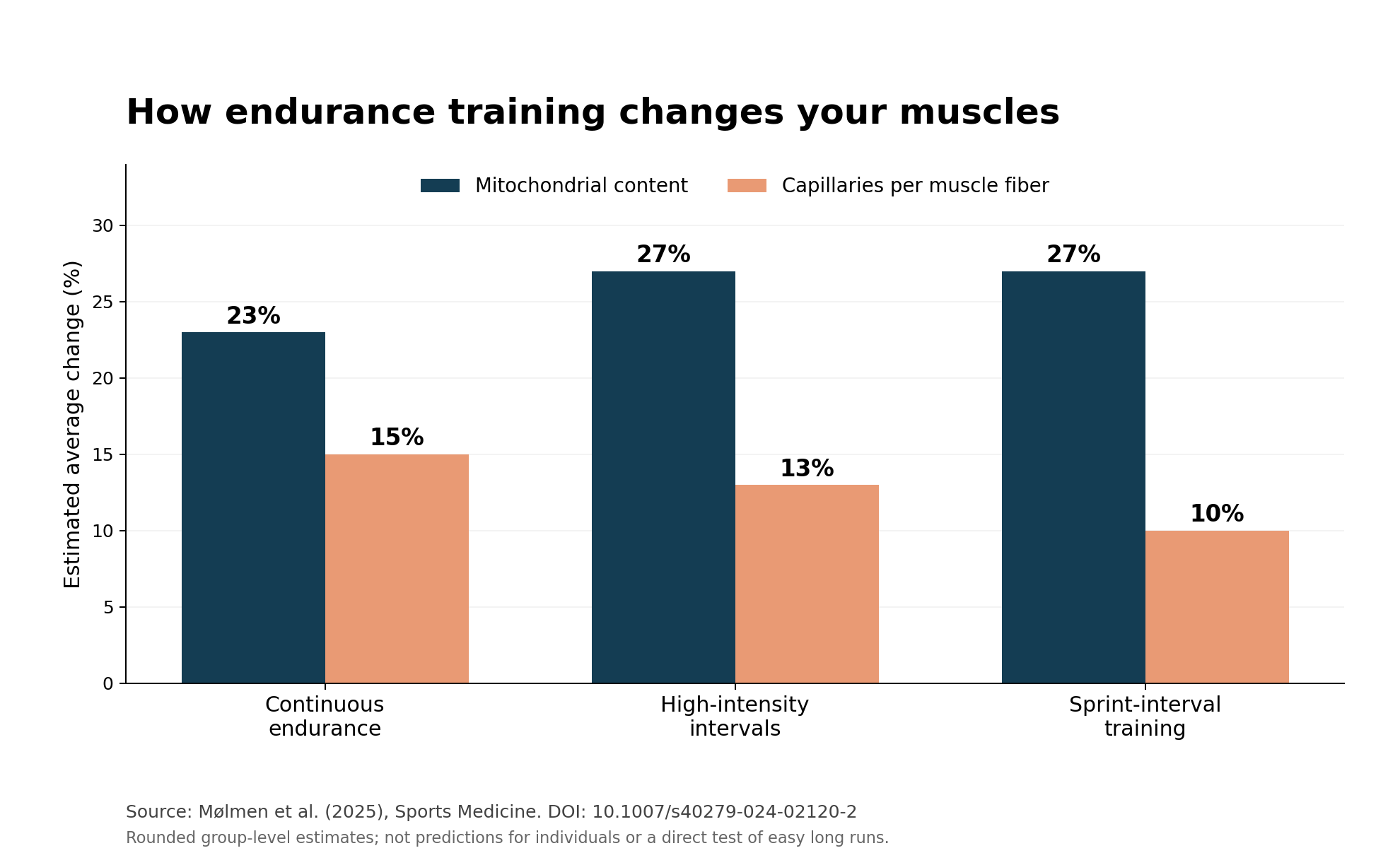
Figure 1. Average Training-Related Adaptations in Mitochondrial Content and Muscle Capillarization
Note. Graph created by RunWithAlli® Coaching using data adapted from Mølmen et al. (2025), Effects of Exercise Training on Mitochondrial and Capillary Growth in Human Skeletal Muscle: A Systematic Review and Meta-Regression, Sports Medicine, 55(1), 115–144. https://doi.org/10.1007/s40279-024-02120-2
Values represent rounded, adjusted estimates of average training-related changes across studies, not individual predictions.
The study examines adaptations across exercise-training methods, not conversational-effort long runs specifically. Present the graph as evidence of aerobic adaptations from endurance training, not proof that easy long runs outperform harder workouts. Research shows that endurance training can increase mitochondrial content and capillary supply in our working muscles, helping support oxygen delivery and aerobic energy production.
Notice how continuous endurance training produces meaningful adaptations without requiring every session to be high intensity!
That doesn't mean faster workouts aren't valuable. It means different training intensities can contribute to aerobic development, and easy running deserves a purposeful place in your training plan.
Running easy isn't wasted training. It's part of building the engine that helps you run stronger for longer.
When you consistently perform aerobic endurance training, your cardiovascular system and skeletal muscles adapt to the repeated demand for oxygen and energy. These adaptations help you sustain running for longer and support your ability to run faster.
1. You Improve Cardiovascular Efficiency
One important adaptation to endurance training is improved stroke volume. Stroke volume is the amount of blood your heart pumps with each beat.
As your cardiovascular system adapts to consistent endurance training, your heart may become more efficient at delivering oxygen-rich blood to your working muscles. Because cardiac output depends on both heart rate and stroke volume, improvements in stroke volume can help support oxygen delivery during exercise. Over time, this contributes to the cardiovascular foundation required for distance running.
What I love most is that you don't need to hammer every run to develop that foundation! It won’t get you fitter, faster, or do either (or both) quicker. Patience, friends! Improving efficiency takes time: working at 60-75% of your max heart rate most of the time you run each week can take several months to improve. Stick with it, stay consistent.
2. You Build More Mitochondrial Capacity
Let's talk mitochondria! These are structures within your cells responsible for producing much of the energy your muscles use during aerobic exercise. Think of them as part of your body's energy-producing MACHINE! Consistent endurance training stimulates adaptations that can increase mitochondrial content and improve the muscles' capacity for aerobic energy production.
There have been many systematic reviews on exercise-training effects on mitochondrial content and capillary growth across thousands of participants. The research supports the value of endurance training for developing these important aerobic adaptations.
However, easy running isn't the only intensity that stimulates mitochondrial adaptations. Higher-intensity training can also produce substantial improvements, too. The difference is that easier aerobic training helps runners handle more endurance work with less fatigue than harder sessions. Aerobic training is more sustainable and needs to be offset by proper recovery to reap the benefits and adaptations of supercompensation in the long run; the runner can build a stronger base and greater ability to see those easier paces get faster (along with the harder session paces) and the ability to run more because the body can. handle doing this over time, not rushing the process.
3. You Support Capillary Development
Capillaries are tiny blood vessels that exchange oxygen, nutrients, and metabolic byproducts between your blood and working muscles. Distance running can increase skeletal muscle capillarization.
Oxygen delivery and utilization are central to endurance performance. A well-developed capillary network supports your muscles' ability to access the oxygen needed for aerobic metabolism. Remember, these adaptations don't happen overnight! They develop through consistent training over weeks, months, and years. That's why I'm always reminding my athletes that consistency matters more than crushing one workout. And now, I’m reminding you too!
4. You Improve Your Ability to Sustain Aerobic Exercise
At lower exercise intensities, your body relies on a combo of carbohydrates and fats to produce energy. Aerobic training can improve the muscles' capacity to oxidize fat and support prolonged exercise. However, zone 2 running does not mean you should avoid carbohydrates. During easy long runs, carbohydrates remain an important energy source. As running duration increases, fueling appropriately becomes increasingly important for performance, recovery, and training quality. Being better at utilizing fat doesn't eliminate your need for glycogen or carbohydrate intake! Marathon runners, take note! Fuel during most of your runs to help your body use both fuel sources, train your body and gut to store more glycogen, and recover better between sessions. We need more fat and carbs for long runs and marathons, and we need to train our bodies and stomachs with fuel, not just training.
5. You Build Durability and Time-on-Feet Tolerance
Running a marathon requires more than a strong cardiovascular system. Your muscles, tendons, bones, and connective tissues also need to tolerate repeated loading over a prolonged period. Appropriately progressed long runs help prepare your body for the physical demands of distance running.
However, more isn't always better. This is why I LOVE time > mileage for many runners. Your body knows effort and time, not distance or pace. Your long-run duration should reflect your current training volume, experience, recovery capacity, and race goals. Of course, there are exceptions, and every runner is different, which is where a coach comes into the equation here! Just remember: you don't earn extra fitness points by finishing every Saturday or Sunday completely exhausted! You want to be able to go on with your day feeling a little spent, of course, but not a couch potatoe!
Why Running Too Fast on Easy Days Can Backfire
Let's talk about something I learned the hard way! Before I started keeping my easy runs truly easy, I ran too fast, too often. I thought that if I could run faster on a regular training day, why wouldn't I? I learned why.
I was accumulating unnecessary fatigue, burning myself out, and struggling to hit the intensities my key workouts required. I wasn't giving my body enough separation between easy training and harder training. That was a problem.
Once I became more intentional about my easy days, I could better manage training stress, recover between sessions, and execute my harder workouts with purpose.
That approach became part of how I structured my training on the way to running sub-three-hour marathons.
Every run should have a purpose!
If your easy long run becomes an unplanned progression run every weekend, you're changing the intended training stimulus. That doesn't mean moderate-intensity running is inherently bad. It means intensity should be intentional. There is a place for threshold workouts, marathon-pace sessions, intervals, hill repetitions, and faster long runs. They should fit within your overall training plan rather than happening simply because you feel good or want a faster average pace.
What Jack Daniels' Running Philosophy Teaches Us
Exercise physiologist and running coach Jack Daniels helped popularize an approach to distance training that assigns specific purposes to different running intensities. His VDOT-based system distinguishes among easy, marathon, threshold, interval, and repetition training paces. The principle is simple: different workouts develop different aspects of running fitness.
Easy running helps build aerobic endurance and supports the training volume needed for distance performance. Threshold running targets your ability to sustain relatively demanding aerobic efforts. Interval training can help develop maximal aerobic capacity. Repetition training emphasizes speed and running mechanics. These training intensities complement one another. That's why I use a structured, periodized approach with athletes at RunWithAlli®. We're not just collecting miles. We're building fitness with intention! Also, please note that Daniels' easy pace is a range, not an obligation to hit the fastest number every day. Terrain, heat, fatigue, and individual circumstances all matter and will change these paces/efforts.
Five Tips for Nailing Your Conversational-Effort Long Runs

1. Use a Heart-Rate Chest Strap
I love using heart rate as one piece of the training puzzle. A chest strap can provide useful heart-rate information during running, particularly when wrist-based measurements become inconsistent. Try monitoring your easy-run heart rate consistently over the next four to six months. Pay attention to your pace at a similar heart rate on comparable routes and in similar weather conditions. As your fitness develops, you may notice you're running faster at a similar cardiovascular effort, as I mentioned briefly earlier. That's a useful sign of progress. Don't expect perfectly linear improvement. Heat, hydration, fatigue, sleep, terrain, and cardiac drift can all influence the relationship between heart rate and pace.
2. WALK When You Need To
Yes, you can walk. Time on feet is time on feet! And yes, you're still training. I cannot emphasize this enough. If your heart rate climbs beyond your intended easy range or your breathing becomes noticeably labored, slow down. If slowing down isn't enough, take a short walking break. This can be especially useful for newer runners, athletes returning from time away, runners navigating hills, and anyone training in hot or humid conditions. A planned run/walk strategy can also help you accumulate manageable time on your feet. Walking is not failing. It's a tool. Truly. I’ve coached many athletes at marathon start and finish lines using this strategy. It works for many and helps your body become more durable and adapted to a set amount of time on your feet (a lot of time, especially for a marathon). There is no pace too slow.
3. Stop Chasing Pace on Every Run
Your easy pace will change. Some days it may feel surprisingly quick. Other days, you'll wonder why your usual easy pace suddenly feels difficult. That's totally normal. Sleep can affect your pace, which is why we love the effort scale. Humidity can do that, so can residual fatigue, or a stressful day at work or at home!
Instead of forcing your watch to show a particular number, focus on the intended effort. The goal is to train the right system, not win an imaginary competition with your previous easy-run splits. That is why I love focusing on heart rate to guide easy runs, especially. It tells you how hard your body is working effort-wise. With a heart-rate strap, of course!
4. Build Your Long Runs Gradually
A common mistake is increasing long-run duration too quickly. Your cardiovascular fitness may improve faster than your musculoskeletal system adapts to additional running volume. That's one reason progressive training matters. Start with a manageable long-run duration relative to your weekly mileage and training experience. Increase gradually, adjusting for recovery, other workouts, and individual tolerance. No universal mileage increase works for everyone. That’s why I’m not including percentages here! Also, don’t forget that planned recovery weeks can help manage accumulated fatigue and support consistency. They are a MUST!
5. Fuel Your Long Runs
Easy doesn't mean unfueled. Ever! If you're running for an extended period, carbohydrate availability, hydration, and recovery nutrition matter.
For many endurance sessions lasting longer than about 30 minutes (yes, 30), consuming carbohydrates during exercise can help, depending on duration, intensity, and the athlete's needs. Any run provides opportunities to practice the fueling strategy you'll use on race day. Don't turn an easy long run into an unnecessary test of how long you can go without eating. Your goal is to support training adaptations. Not to simply survive the session!
Not Every Long Run Should Be Easy
This is one of the most important distinctions I want runners to understand. Conversational-effort long runs are incredibly useful, but they aren't the only type of long run worth doing.
Depending on the athlete and training phase, I may program easy aerobic long runs, progression runs, marathon-effort long runs, long runs w/ intervals, or run/walk long runs. Each one serves a purpose based on the runner's needs. Each run has a purpose!
For example, an athlete early in a marathon build may benefit from consistently controlled aerobic long runs before introducing more race-specific intensity. A more experienced marathon runner may eventually perform long runs containing blocks of marathon-pace work to practice race-specific demands. Neither approach is automatically better. The right long run depends on the athlete, the goal, and the timing within the training cycle.
How to Know Your Easy Running Is Working
Some signs that your aerobic training may be moving in the right direction include: Running a little faster at a similar heart rate under comparable conditions. Easy runs feel more comfortable at previously challenging paces. You can maintain conversational effort for longer durations. You're recovering more consistently between training sessions. Your key workouts feel more manageable. You're building weekly training volume without constantly feeling exhausted.
Remember, these are useful observations, not guarantees or standalone measurements of aerobic fitness! Fitness adaptations take time. One slow run doesn't mean you're losing fitness. One unusually fast easy run doesn't mean you've suddenly gained a new level of fitness. Look for trends across several weeks or months;)
Slow Down With Purpose So You Can Run Faster When It Counts
Conversational-effort long runs aren't about being slow. They're about being intentional. They're about building your aerobic engine, accumulating sustainable training volume, and giving your body time to adapt. They're about understanding that fitness is built through the combination of training stress, fueling, recovery, and consistency. They're about recognizing that faster running doesn't always require running faster. I've experienced the difference in my own training, and I've seen the value of purposeful aerobic work with athletes across different ages, abilities, and race distances.
Easy long runs are only one piece of the puzzle. Don’t forget it! Your training should be systematically structured around your harder workouts, easy runs, strength training, cross-training, rest days, fueling, and recovery. There's a method to the madness. Train easy when the plan calls for easy. Train hard when the plan calls for hard. And give yourself the opportunity to recover from both. That's how we work toward becoming stronger, more consistent, and more resilient runners. No pace too slow. Fast is for all!
At RunWithAlli® Coaching, we create personalized training plans based on your experience, goals, lifestyle, and individual training needs. Whether you're preparing for your first half marathon or chasing your next marathon PR, we'll help you understand not just what to run, but why.






Ready to Run Faster?
Apply now for 1:1 RunWithAlli Coaching
Join our Group Mile to Marathon Coaching Community
We’ll help you integrate speed, strength, and recovery into one holistic plan designed for YOU!
Subscribe to the RunWithAlli Newsletter for exclusive tips
Follow @RunWithAlli on IG for daily training insights
Let’s get you to your next starting line together!
References
Mølmen, K. S., Almquist, N. W., & Skattebo, Ø. (2025). Effects of exercise training on mitochondrial and capillary growth in human skeletal muscle: A systematic review and meta-regression. Sports Medicine, 55(1), 115–144. https://doi.org/10.1007/s40279-024-02120-2
